· Tile roofingMaintenance
Your tile looks perfect. Your roof might still be failing.
On a desert tile roof the tile is not the waterproofing — the underlayment beneath it is, and it wears out decades earlier. Here is how to tell where yours stands.
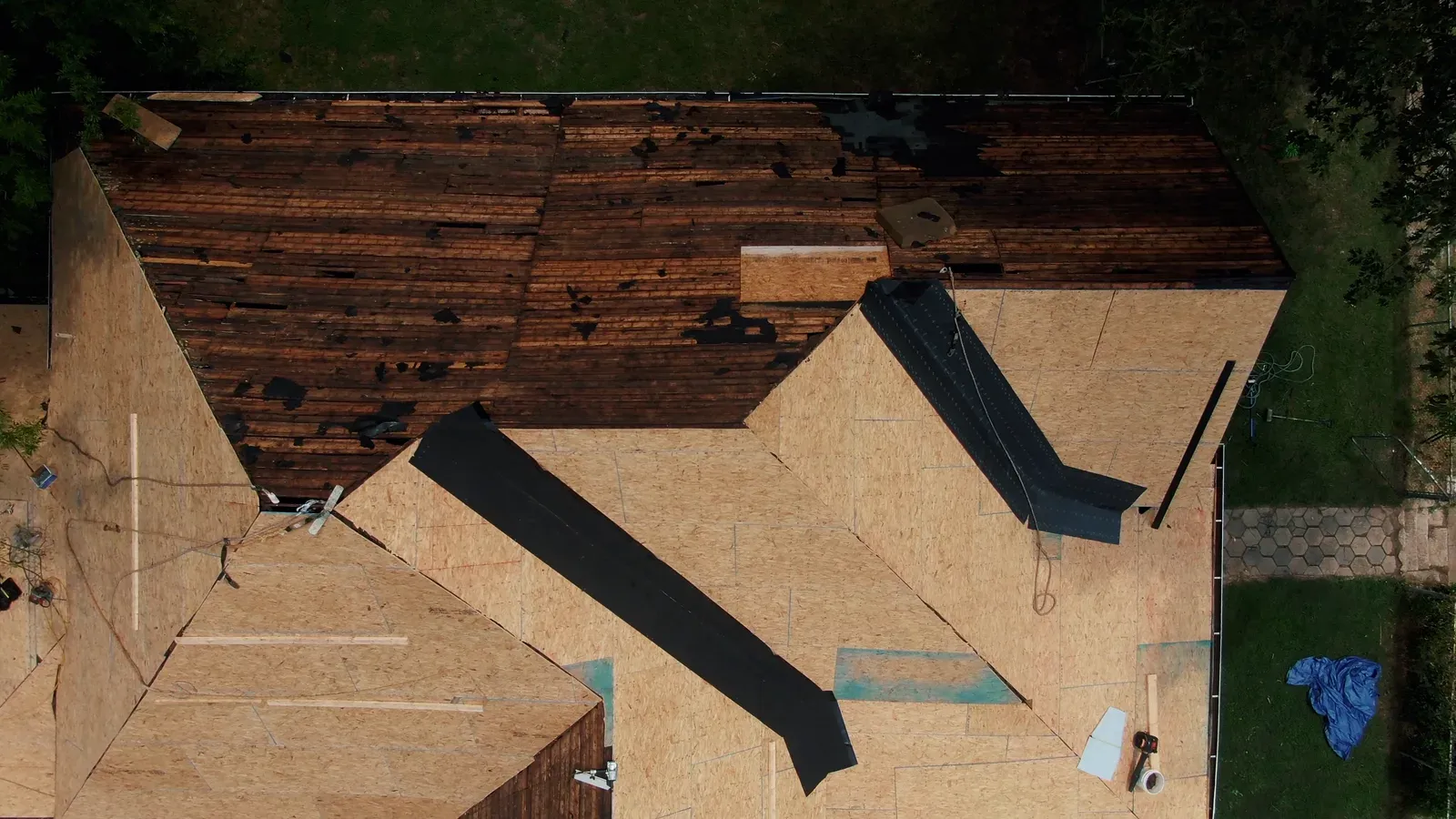
The single most common misunderstanding we run into on Coachella Valley roofs is this: people believe the tile keeps the water out. It does not. Concrete and clay tile are a shield — they take the sun, the wind and the physical abuse so that something else does not. That something else is the underlayment, a membrane layer stapled or torched to the deck underneath, and it is the actual waterproofing on your roof.
Tile can easily last fifty years. Underlayment in this climate does not.
Why underlayment ages faster here
Tile roofs get hot. Not just air-temperature hot — the space beneath a tile field in July sits well above ambient, and it cycles that way every single day for months. Organic-felt underlayments dry out, lose their oils, go brittle and crack. Even modern synthetics have a service life that gets shorter the hotter and drier their environment is.
Meanwhile the tile above stays looking exactly the same. It is entirely normal for us to walk a roof where the tile could pass for new and find underlayment beneath that crumbles when you lift a piece.
The signs, roughly in order of subtlety
Stains that come and go. A ceiling mark that darkens after a storm and fades in between is the classic early symptom. Water is getting past the underlayment, tracking along framing and evaporating between events.
Granules and grit in the gutters or at the downspouts. Some underlayments have a granulated surface. When you start finding that material collecting below the roof, the layer above is breaking down.
Slipped or sliding tiles. Tiles that have shifted out of course are often a symptom rather than the cause — the fastening substrate underneath has degraded.
Cracked or broken tiles you did not notice before. Individually these are a repair. In quantity across the field, they suggest years of foot traffic and thermal movement, and the underlayment is the same age.
Visible daylight or debris in the attic. If you can get into the attic space safely, look up during the day. Pinpoints of light, dust trails, or dark staining on the sheathing all indicate the layer above is no longer continuous.
Age. If nobody has touched the underlayment in twenty-plus years in this valley, assume it is at or near the end regardless of how the tile looks.
What it does not mean
It does not automatically mean you need a new tile roof. This is the part worth understanding before you get a quote, because it is where a lot of money gets spent unnecessarily.
If the tile is in good condition, the correct repair is a lift and reset: we carefully lift and stack the existing tile, strip the old underlayment down to the deck, repair any damaged sheathing, install new underlayment, replace the broken tiles, and reset the same roof back down. The house looks identical afterwards. The waterproofing clock starts again. And it costs meaningfully less than an all-new tile roof.
The tile is often the most expensive component and the one with the most life left. Throwing it away because the cheap layer underneath failed is backwards.
When the tile does need replacing
Sometimes it genuinely does. Heavily spalled or delaminating concrete tile, widespread breakage, or a discontinued profile with no matching stock available can all push a project toward full replacement. Clay tile in particular can be difficult to source a match for if the original run is long gone — though we can usually find something workable.
An honest inspection tells you which situation you are in, with photographs, before you commit to anything.
What to do next
If your tile roof is fifteen years old or more and has never had underlayment work, get it looked at before monsoon season rather than during it. Our inspections are free anywhere in the valley, they take about an hour, and you get photographs of what is actually under there — not a verbal assurance.
Knowing your roof has five good years left is worth exactly as much as knowing it has none. Both let you plan.